
A Look Back at the 2025 AGM, the Panel “Drawing Inspiration from Struggles to Guide the Transition,” and the Neighborhood Tour in Côte-des-Neiges

On November 19, more than 100 members, interested individuals, and allies of the alliance gathered in Côte-des-Neiges for a rich, inspiring, and forward-looking day: a lively AGM, an inspiring panel featuring voices from the political struggles of recent decades, and a neighborhood tour that highlighted the strength of the local social fabric. It was a day to celebrate how far we’ve come and to collectively fuel our ambition for 2026+.
An AGM focused on the future
The AGM was an opportunity to review the progress made together this year.
Here are the highlights:
-
More than 120 member organizations, an ever-growing and increasingly diverse membership;
-
15 public events with various objectives: raising awareness, mobilizing, networking, and deliberation;
-
A Rupture(s) Summer Camp, featuring group sessions, four meetings of theEspace Quartiers, and three neighborhood tours (Saint-Léonard, Pointe-Saint-Charles, Côte-des-Neiges);
-
8 working groups and thematic initiatives working on key transition issues: housing, reducing car dependence, environmental justice, democracy, climate resilience, food, and economies in transition;
-
Significant advances in the way TEC operates:
• A vision of transition (our shared compass)
• A theory of change
• A strengthened governance framework
• Some initial public statements
• An open knowledge base
-
A project on TSÉ funding, including the collaborative development of the eight proposals, the event on April 30, and discussions with funders regarding a future pooled fund.
The 2026+ Guidelines signal a ramp-up:
-
Build broad support for the 2027 Montreal Summit by laying the groundwork for strong civic and organizational participation.
-
Strengthen and consolidate existing working groups and thematic initiatives, ensure the continuity of their work, and maximize their ability to generate proposals on the key themes of Montreal’s transition (funding, housing, mobility, culture, democracy, social justice, etc.).
-
Strengthen democratic participation and collective action within the alliance: foster the conditions necessary for participation that is enjoyable and stimulating for members
-
Step up public relations and advocacy efforts to amplify the alliance’s voice in the public sphere and build a relationship of trust with the media
-
Continue to strengthen our community ties through four neighborhood visits, four major “Espace Quartiers” gatherings, and an environmental justice initiative that connects metropolitan issues to local realities.
-
Explore collaboration with other Quebec initiatives, strengthen common ground, and amplify collective momentum toward an ambitious transition.
To view the PPTX presentation, click here!
We also selected our new steering committee (SC) by lottery; its composition reflects the various pillars of the alliance’s vision.
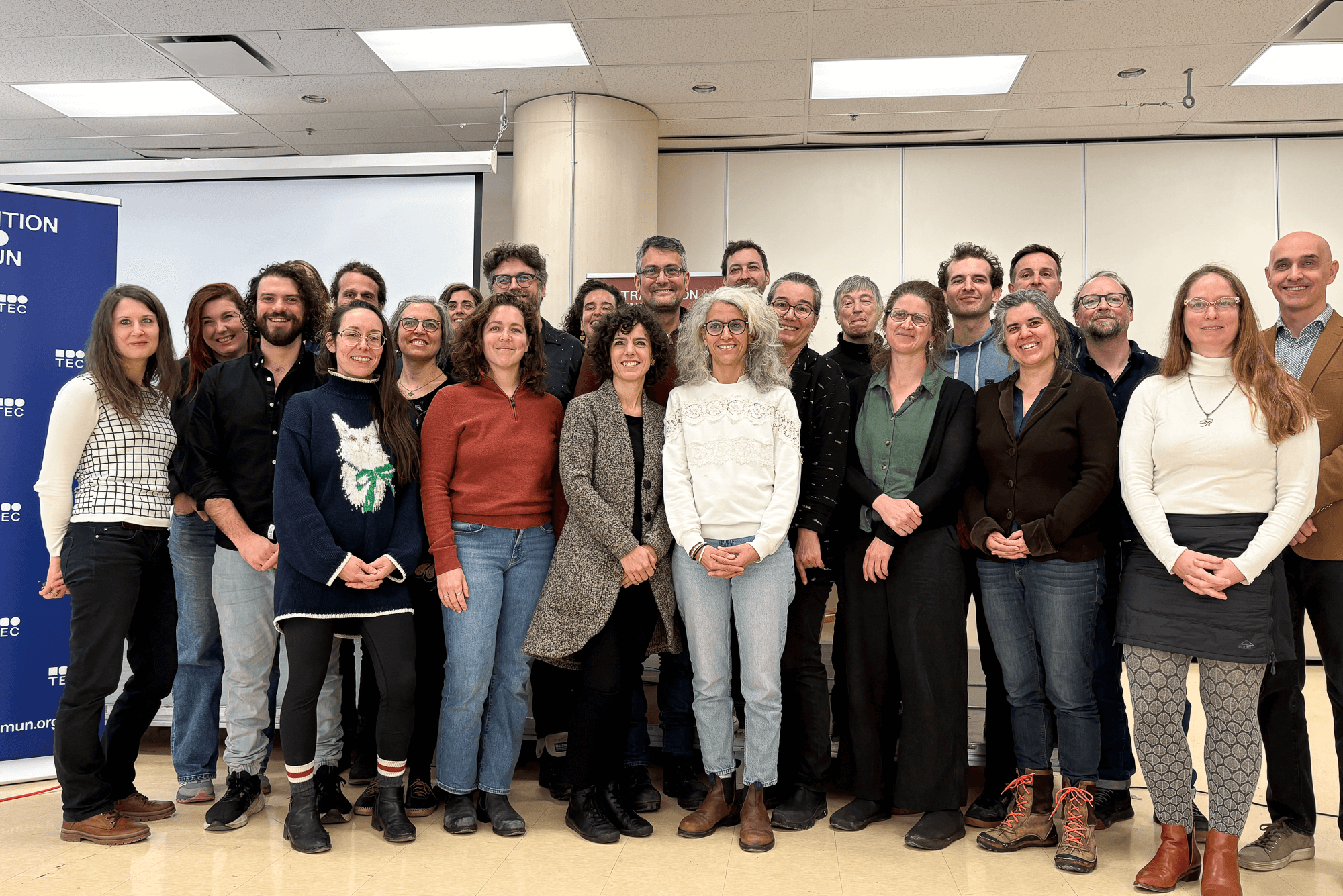
Following a secret ballot, it’s now Joakim Lemieux and David Kaiser’s turn to be re-elected to the Executive Committee!
An inspiring panel of several prominent political figures
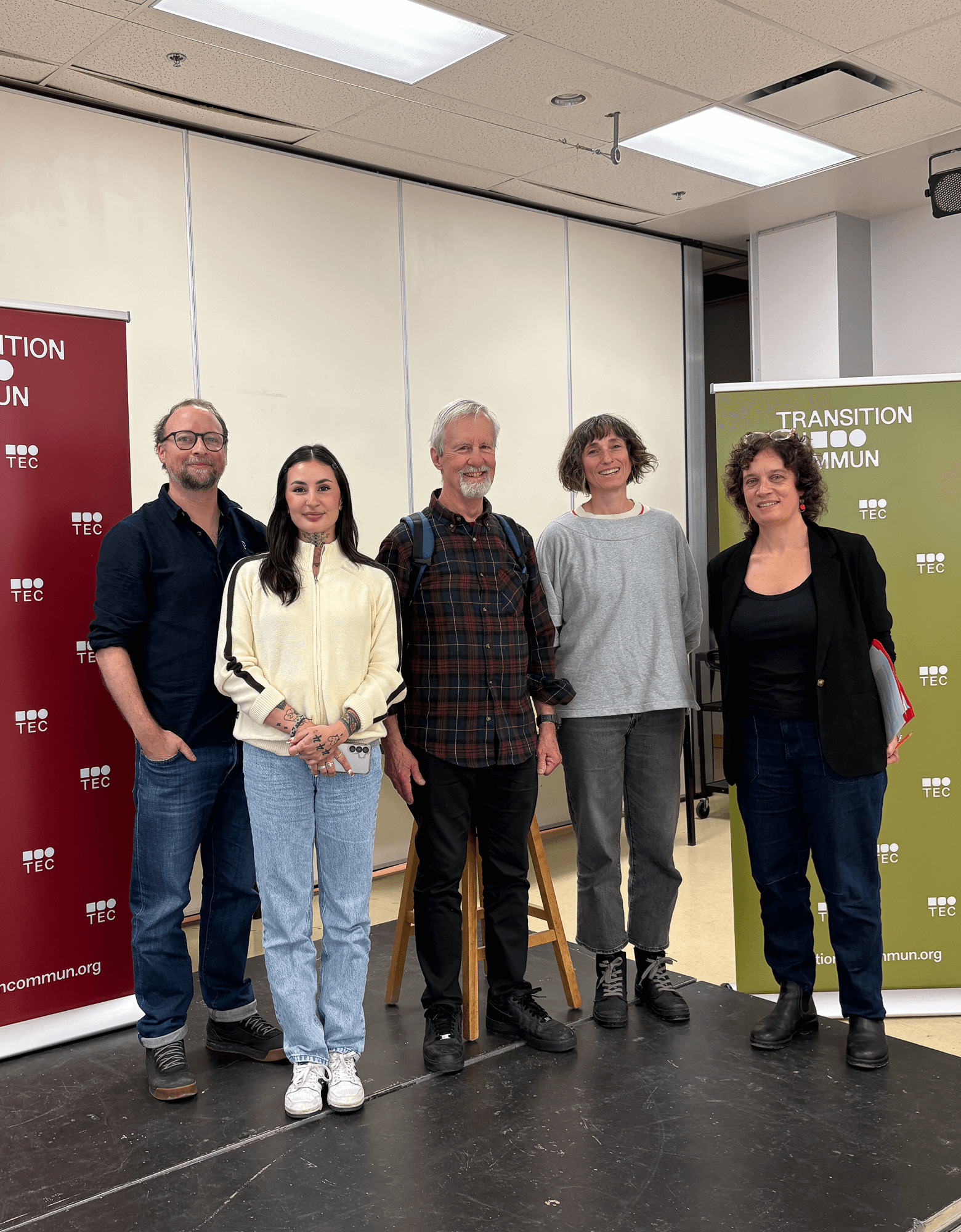
At our AGM, four dedicated voices—representing mobility, Indigenous justice, social development, and local democracy—reflected on the struggles that have transformed Montreal and Quebec. Their message is clear: transitions never happen on their own. They emerge from strong alliances, unwavering political courage, and communities that refuse to give up.
A common theme emerges from the panelists’ accounts: to ensure long-term sustainability, we must connect our struggles, foster civic engagement, and cultivate that “combative joy” that gives us strength in difficult times.
The panel also highlights three key points for the future:
-
Strengthen democracy and tools for participation;
-
Taking action at multiple levels—from the neighborhood to the national level;
-
Build meaningful alliances, particularly with Indigenous communities, to address social, environmental, and democratic crises.
👉 Read the full summary to understand how the struggles of the past shed light on the transition we must undertake today.
You can also listen to the entire panel discussion below.