
Municipal Elections – Proposals from the “Reverse Debate” – Let’s Transform the City Together (August 29, 2025)
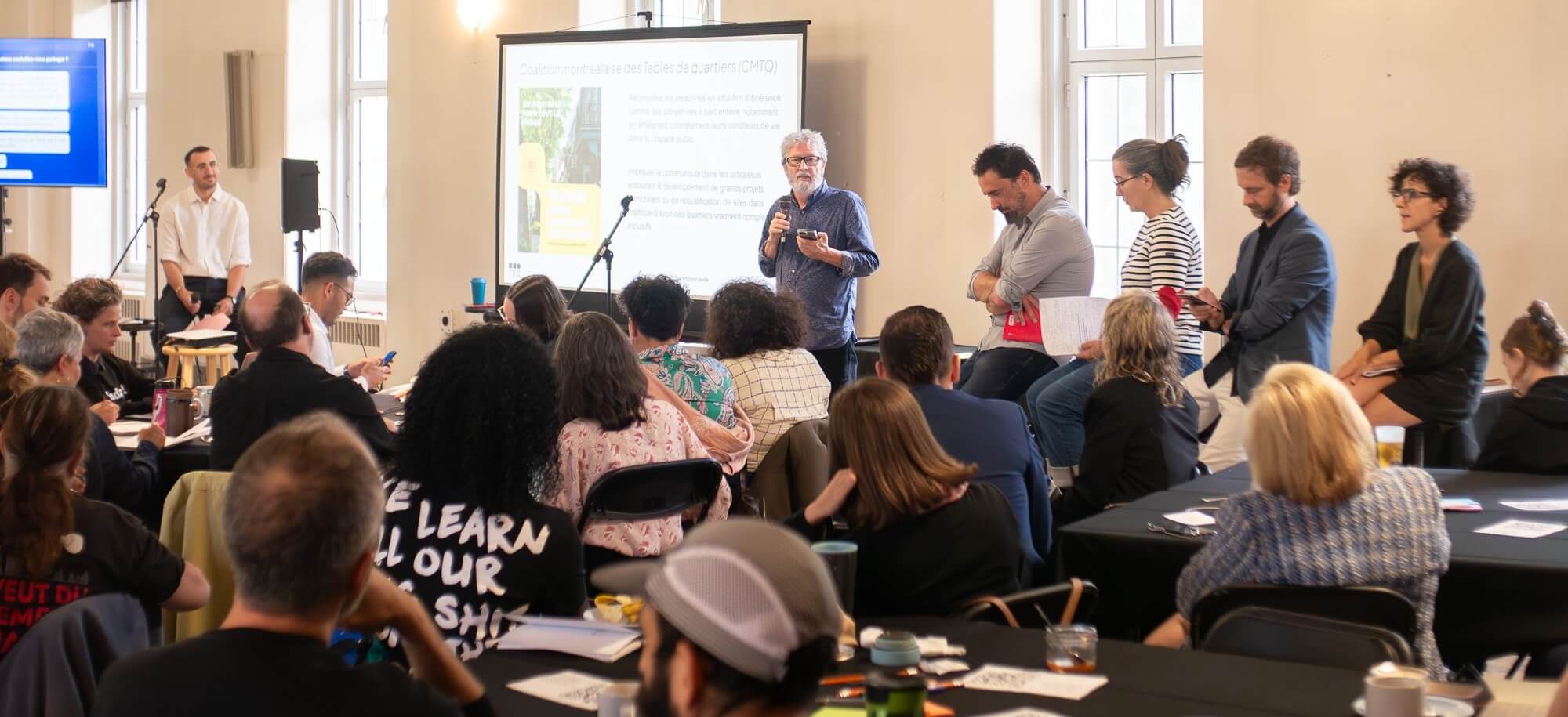
On August 29, 2025, Transition en commun brought together nearly 200 people at the Cité des Hospitalières as part of the Rupture(s) : about thirty candidates for the municipal elections and more than 150 representatives from community organizations, network leaders, and citizen groups. The goal: to reverse the usual dynamic between elected officials and citizens by giving civil society a voice, while the candidates listened, took notes, and responded during the second half of the session. This exercise in reverse democracy has helped bring to light proposals grounded in reality, built on hands-on experience and a deep understanding of the needs of Montreal’s residents.
The discussions highlighted a shared vision: Montreal’s transition must be democratic, fair, and transformative, drawing on the strength of neighborhoods and collaboration among public officials, community leaders, and citizens.
Among the key messages:
- Rethinking Local Democracy
- Create permanent deliberative spaces (citizens’ assemblies, juries selected by lottery, joint committees) with real power to influence.
- Promote a culture of the right to make mistakes and of kindness in public participation.
- Strengthen the transparency of decisions and accountability at the municipal and borough levels.
- Supporting neighborhoods and community leaders
- Set up a “transition projects” one-stop shop to simplify procedures and remove regulatory barriers.
- Ensuring affordable and secure spaces for organizations, artists, and community initiatives.
- Recognize and provide sustainable funding for neighborhood ecosystems as essential infrastructure for the transition.
- Right to Housing and Food
- Taking Action Against renovictions and energy povertyby combining eco-friendly renovation with social justice.
- Recognizing the right to food and support neighborhood food hubs that connect producers, organizations, and public institutions.
- Equipping the City to measure regional inequalities and direct resources to where they are most urgently needed.
- Environmental Justice and Inclusion
- Promoting environmental justice a cross-cutting principle of municipal policies.
- Recognize and include Indigenous peoples in decision-making bodies and processes.
- Take clear stands in solidarity with Palestine and evaluate municipal partnerships and investments in light of human rights and climate action
- Financing and Environmental Taxation
- Implement an ambitious municipal eco-tax system to finance the transition and reduce dependence on one-time programs.
- Create a shared transition fund bringing together the City, boroughs, foundations, and socioeconomic stakeholders.
- Transition Culture and Mindset
- Promote political courage, cooperation, and humility as drivers of change.
- Promote a shared culture of transition : open, joyful, and rooted in solidarity.
- Promote continuing education for elected officials and civil servants on a just transition.
This debate confirmed that in Montreal, civil society already has a clear and coherent vision for the socio-ecological transition : a fairer, more inclusive, and more democratic city. The proposals collected constitute a collective foundation for future campaign pledges and for our joint transition efforts in the coming years.