Sylvain A. Lefèvre
Centre de recherche sur les innovations sociales (CRISES), ESG UQAM

How can we adequately fund the changes required by the transition and the organizations driving them?
Given the scale of the transformations that need to be undertaken, funding for the transition must go beyond ad hoc and technology-driven approaches to support initiatives that are deeply rooted, sustainable, and community-led. This requires mission-based funding, fairer terms tailored to local realities, and better structuring and allocation of resources. Strengthening this funding also depends on collective advocacy capable of exerting a lasting influence on donors.
Centre de recherche sur les innovations sociales (CRISES), ESG UQAM
In a rare opportunity for dialogue and collaboration between funders and organizations committed to the socio-ecological transition in Montreal, the event’s participants gathered to assess the current state of funding for the ecosystem and identify concrete solutions to address increasingly pressing needs. Eight areas for further action emerged from the discussion.

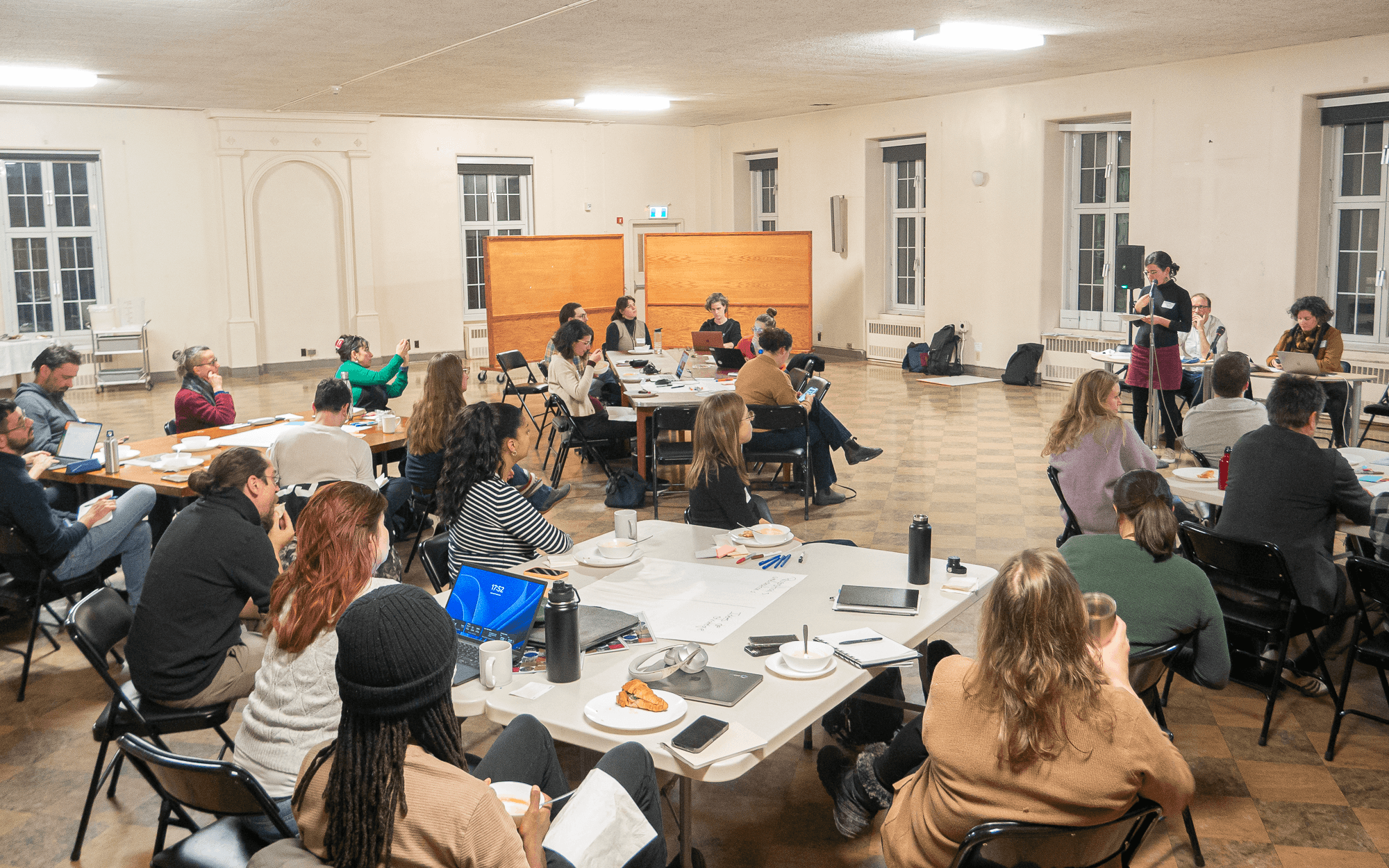
Following up on the Collective Day on April 30, this major gathering of the Espace Quartiers brought together a diverse group of stakeholders (community organizations, transition networks, experts, and institutional partners) to explore in depth the challenges of financing the socio-ecological transition at the neighborhood level. Through collaborative workshops, participants worked to refine and adapt various potential solutions, including the pooling of resources, mission-based funding, new forms of governance, and the development of an advocacy strategy.