

On October 25, an inaugural meeting co-organized by the Réseau Demain le Québec (RDQ) and Transition en Commun (TeC) between Montreal citizen groups and TeC’s Espace Quartiers took place. Nearly 35 people, including 20 citizen groups*, community organizations, and City representatives, participated in the event.
The objectives of the meeting were as follows:
- Fostering Connections Among Montreal’s Civic Groups
- Facilitate the participation of citizen groups in TeC
- Hold group discussions on civic engagement and the socio-ecological transition
After a few bites to eat and a brief welcome, attendees were invited to participate in three thematic discussions in small groups:
- Make “Transition en Commun” a catalyst for civic action.
- To foster productive relationships between citizen groups and the City and its boroughs.
- Promote collaboration between citizen groups working on environmental issues and those working on social issues at the neighborhood level
So here are a few notes on the discussions that took place during that wonderful evening!
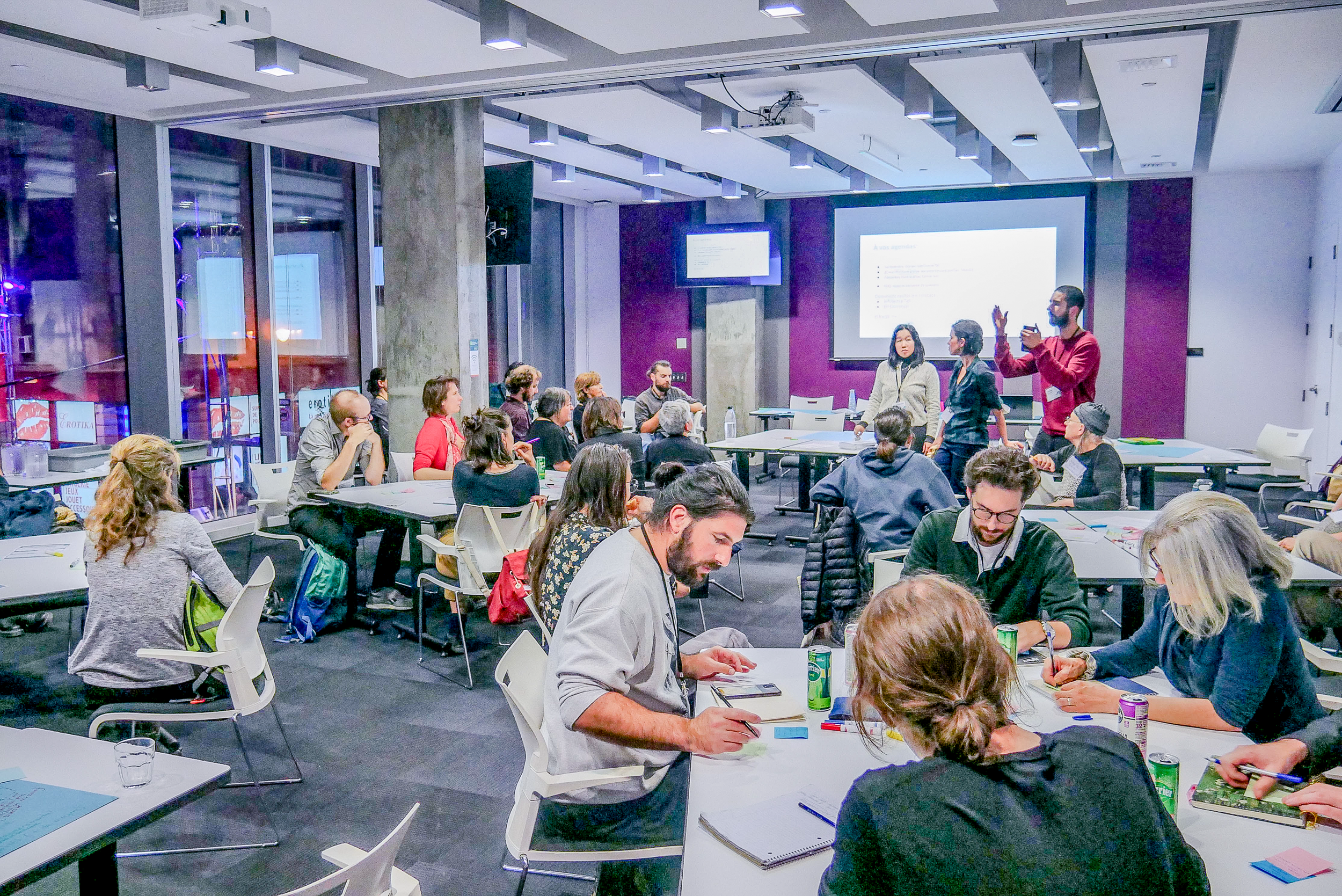
Discussion #1 – Using “Transition en Commun” as a Catalyst for Civic Action
First, regarding the discussion “Making Transition en Commun a Catalyst for Citizen Action,” the participants were certainly not short on ideas! It was an excellent opportunity for citizen groups to share their thoughts on the different paths TeC could take to propel them even further. Here’s a quick rundown of some of the ideas that emerged:
- Share information to reach more people and encourage their involvement in their neighborhood
- Monitor developments related to accessible funding for citizen groups
- Highlight citizen-led initiatives to show that another world is possible, and that the socio-ecological transition is taking shape in our neighborhoods
- Supporting groups’ demands to influence institutions
- To foster the creation of connections between citizen groups and other stakeholders in the socio-ecological transition in Montreal
- Facilitate the pooling of resources (material, financial, human, etc.) among citizen groups
- Help community groups gain access to meeting spaces in their neighborhoods
- Create a space for sharing neighborhood experiences, both in person and online
In addition, participants were asked to answer the following question: How can citizen groups help drive TeC forward?
Here are some of the responses mentioned by the citizen groups:
- It is essential to have a diversity of opinions and different perspectives on the socio-ecological transition
- Groups can serve as living laboratories or local testing grounds
- The groups’ close ties with Montreal residents and the large number of volunteers who participate in the groups’ activities
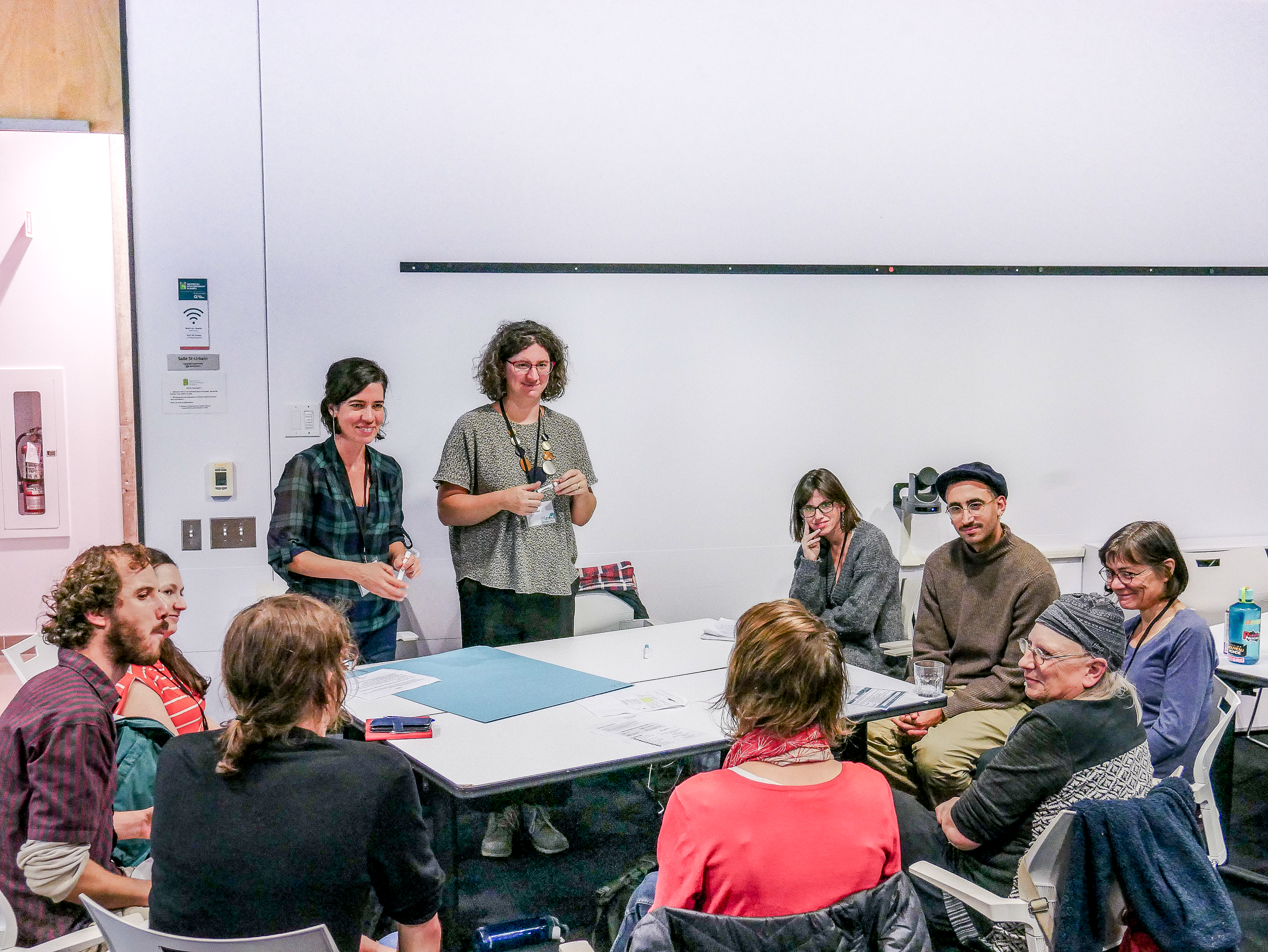
Discussion #2 – Building Productive Relationships Between Citizen Groups and the City and the Boroughs
The second topic addressed the issue of relations between citizen groups and the City and its boroughs. For this session, an elected official and three city employees participated in the discussion to help citizen groups better understand the municipal system. It should be noted that most of the groups mentioned that they had already communicated with their elected officials and/or borough representatives in connection with their projects.
From the very beginning, several people have shared their lack of understanding of the municipal system. However, most acknowledge that this is a local government that is more accessible than other levels of government. In this regard, the groups would like to receive more support for their efforts and gain a better understanding of the different levels of government and how they relate to one another (e.g., how do municipalities collaborate with provincial and federal governments?).
The groups also wondered about the steps involved in the ideation and submission of a project, through its evaluation and implementation. It was at this point that the “Montréal – Citizen Services” mobile app was mentioned, which allows users to track the progress of certain projects.
As mentioned earlier, we are fortunate to have a city councilwoman on our team; she is well-connected with the citizen groups in her district, which is why she was able to offer some advice to help these groups achieve their goals. Here is a brief summary of that advice:
- Sometimes people lack information about various projects or programs, so don’t hesitate to ask the administration and elected officials for information. Depending on the issue, it’s best to contact city officials rather than elected officials.
- Use email (since it leaves a paper trail) and send follow-up emails, or call the target person directly
- Don’t just focus on the city council
- Public meetings can be good places to give your opinion on a project
- Identify the best ways to make a difference before getting involved in something (prioritize courses of action based on effectiveness)
- Participation in Online Consultations
- Send emails
- Ask a question of the city council
- Create a news brief to discuss a project
- A motion introduced and adopted at a council meeting can be a good way to ensure that certain issues move forward, because once a motion is adopted, the administration becomes accountable for the provisions of that motion.
- Submitting a brief can be useful, especially if you follow up after submitting it (it is even possible—and indeed advisable—to indicate in the brief that you wish to continue the discussion on a particular aspect).
- Make clear and specific requests and specify a reasonable timeframe for receiving a response
- Require that the response be made public (e.g., city council) to increase the administration’s accountability
In fact, many employees in the boroughs want to work with residents, so don’t hesitate to knock on doors. In fact, residents and the municipality are, in some respects (or in certain cases), natural allies. In fact, there are even several boroughs today that have teams or offices dedicated to the ecological transition. In addition, there’s a genuine desire to break down silos between departments and ensure that when an employee leaves, follow-up is easier thanks to better internal information sharing. The idea is to avoid making the process too dependent on a relationship between two individuals, so that if one person leaves, the connection can still be easily maintained.
That said, as a citizens’ group, we sometimes get the impression that certain elected officials are only interested in citizen mobilization to polish their image, without truly wanting to bring about change by listening to and implementing some of the proposals put forward. With this in mind, it makes sense to identify the “champions” of the transition (within the administration and among elected officials) and meet with them to move things forward!
In short, it was a space for rich and constructive dialogue that fostered connections among people who are not always accustomed to meeting outside of formal settings. The lack of understanding regarding how the municipal government operates was alleviated, in large part thanks to the city councilwoman’s insightful advice. Indeed, her advice certainly helped participants better understand how citizen groups can have a greater impact at the neighborhood level. Furthermore, the willingness of several city employees to break down the silos between the city’s many services and departments is encouraging. The fact that there are “champions” of the socio-ecological transition throughout the administration makes it possible to envision a real transformation of the structure, and it is essential for groups to identify these “champions” in order to build relationships with them.
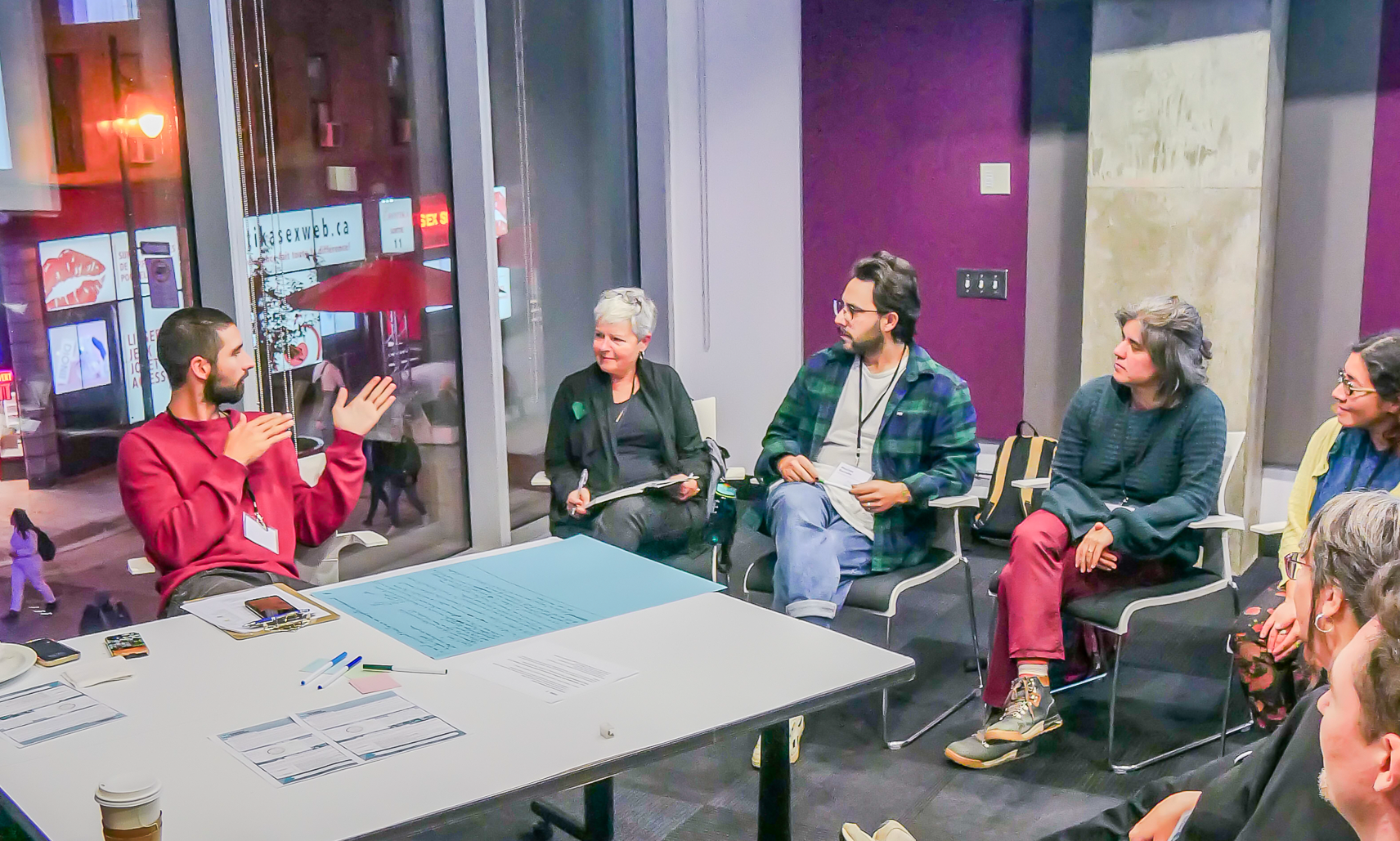
Discussion #3 – Collaboration between citizen groups addressing environmental issues and those addressing social issues at the neighborhood level
The third table brought together people who wanted to discuss the connections between social-purpose and environmental-purpose groups. It was a great opportunity to reinforce the idea that social and environmental issues are interconnected and that we need to take an intersectional approach in our projects and efforts toward socio-ecological transition.
In fact, during the breakout group discussions, we had the opportunity to explore in greater depth the arguments highlighting the importance of drawing connections between various social and environmental issues, as well as potential courses of action. The following are the main takeaways from these discussions:
- Consistent action is needed to combat social inequalities and, at the same time, reduce environmental vulnerabilities
- Low-income people will be the ones most affected by climate change, yet they are the ones who contribute the least to it
- We need to change our relationship with living things, to see ourselves as an integral part of nature rather than as something separate from it
- It is essential to shift the focus from technological solutions to social solutions
- Environmental groups must reach out to social groups and organizations
- Working Together to Increase Our Impact
- Let’s make the socio-ecological transition fun!!!

Toward Greater Citizen Participation in the Socio-Ecological Transition
In conclusion, many ideas were shared during the evening, and obstacles and potential solutions were also discussed. The goal was to establish initial connections among various individuals committed to the socio-ecological transition and to foster constructive dialogue among them. The discussion rounds certainly helped develop a shared understanding of the main challenges and opportunities facing citizen groups actively involved in transforming their communities.
All of this provides further momentum for the teams at Réseau Demain le Québec and Espace quartiers to continue amplifying the voices of citizen groups and enabling them to have a greater impact at their own level. Stay tuned for more!
————————————–
*List of participating groups:
The Plateau is ours!
Angus is having fun
MTL Climate Coalition
The Discount
“À nous la Malting!” Collective
Pour Nos Enfants/For Our Kids MTL
Mothers on the Front Lines, Montreal
MTL Eco-Transition
Tomorrow in Verdun
Climate Justice MTL
Mobilization 6,600 MHM
Popular Convergence
Civic Enthusiasm
The Forbidden Fruits
Climaction Community
Milton-Parc Citizens’ Committee
The Eco-Center
The Market Gardeners’ Guild
Ahuntsic-Cartivierville Environmental Action Group
Little Family
Youville Citizens’ Committee