Nadim Tadjine
Coordinator, Participative Democracy and Governance Working Group

In the face of polarized debates and mistrust of institutions, there is an urgent need to rethink our democracy beyond electoral cycles
The socio-ecological transition requires inclusive spaces for dialogue and collective decision-making where citizens and organizations actively participate in policy development, the management of the commons, and the implementation of concrete solutions. This requires permanent mechanisms for co-creation, adequate funding for citizen-led initiatives, and the recognition of the knowledge of marginalized groups to ensure that ecological and social measures are appropriate and supported collectively.
Coordinator, Participative Democracy and Governance Working Group
Centre d’écologie urbaine
Rosemont–La Petite-Patrie Borough
Indépendante
General Co-Coordinator
TIESS - Territoires innovants en économie sociale et solidaire
New World Institute
Office de consultation publique de Montréal (OCPM)
Montreal Office of Public Consultation (OCPM)
Université de Montréal
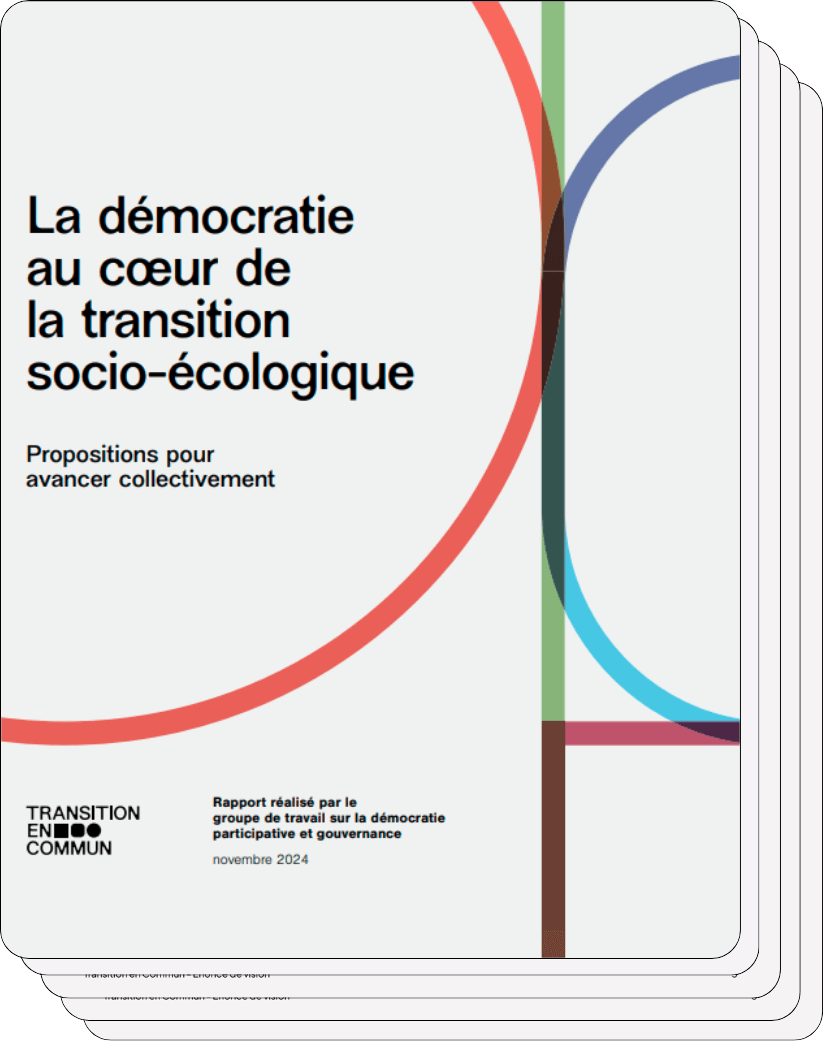
The result of a major collaborative effort by the DPG working group, the report *Democracy at the Heart of the Socio-Ecological Transition* offers a brief overview of democracy in Montreal in the context of transition, as well as a series of proposals and conditions for strengthening and renewing our approach to democracy. Presented to nearly 200 participants gathered for the Montreal Forum in November 2024, this document served as the basis for discussions and remains an important foundation for the alliance’s work today.
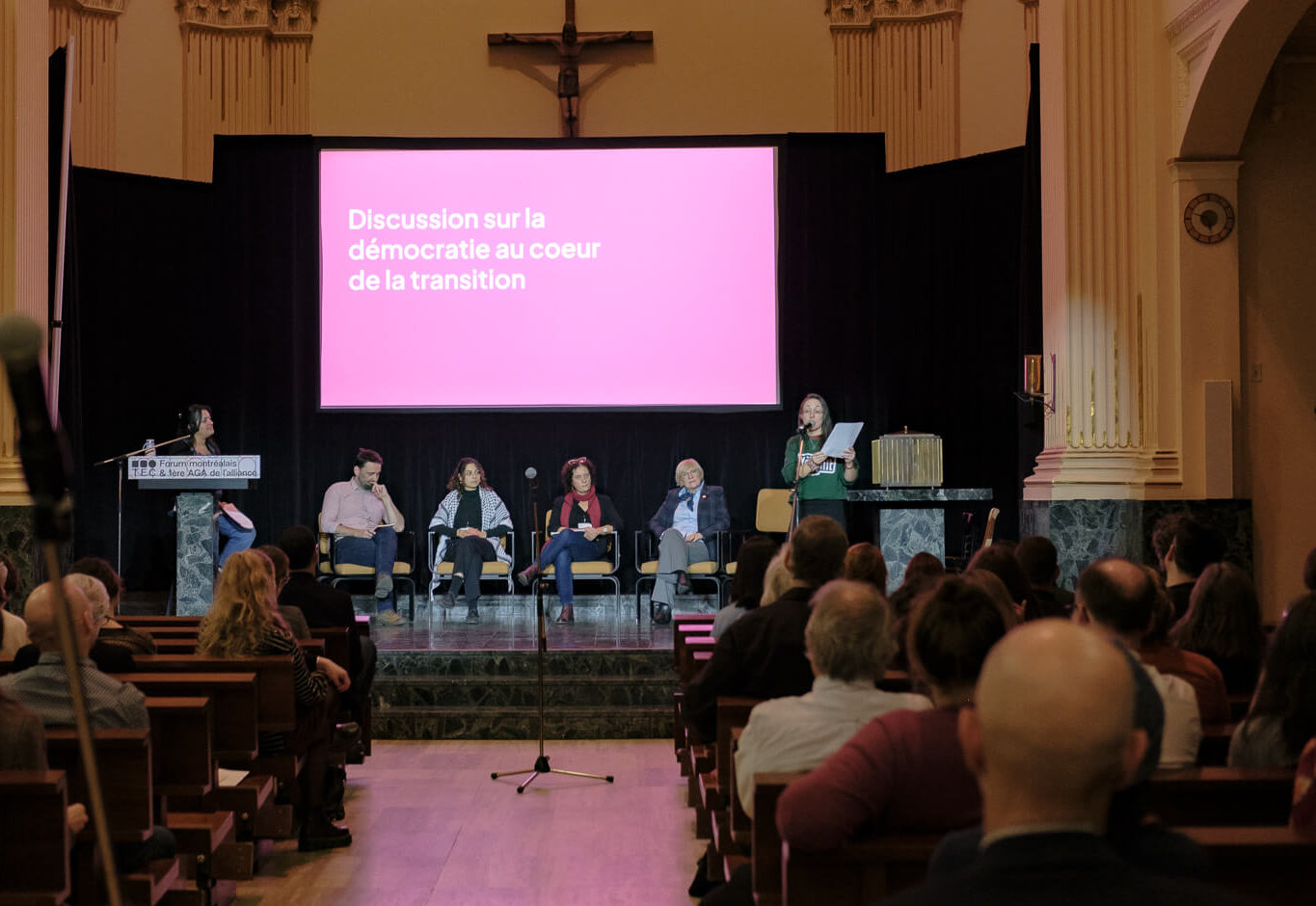
This major event for the alliance brought together more than 200 people to exchange ideas, debate, and build upon nine proposals aimed at strengthening and renewing Montreal’s democracy in order to successfully navigate the socio-ecological transition. Featuring opening presentations by several key figures in Montreal’s past and future political landscape (Magda Popeanu, Laurence Bherer, Nancy Neamtan, and Joakim Lemieux), as well as a final plenary session that gave a voice to citizens and neighborhood delegations, the Forum brought together a rich diversity of institutional, academic, and community stakeholders.
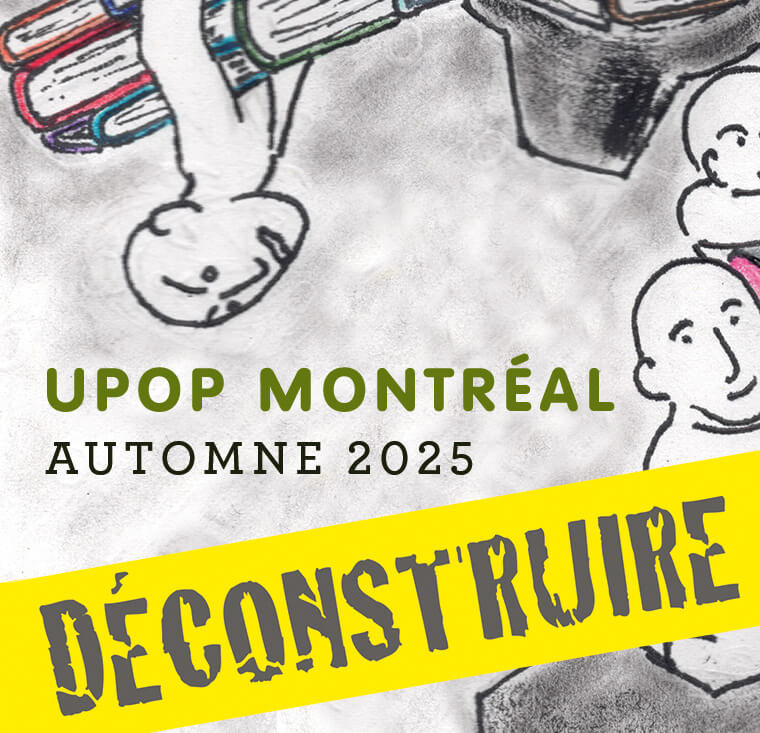
The course “Reinventing Local Democracy: Innovative Tools and Practices,” offered as part of UPop Montréal’s open and free program, provided an opportunity to explore concrete ways to revitalize municipal democracy. Coordinated by Manon Giri (TEC) and led by speakers such as Isabelle Gaudette, Dan Furukawa-Marques, Jonathan Durand-Folco, and Miriam Fahmy, the series addressed key themes such as participatory budgeting, the commons, citizen influence on public policy, the voice of future generations, and random selection.
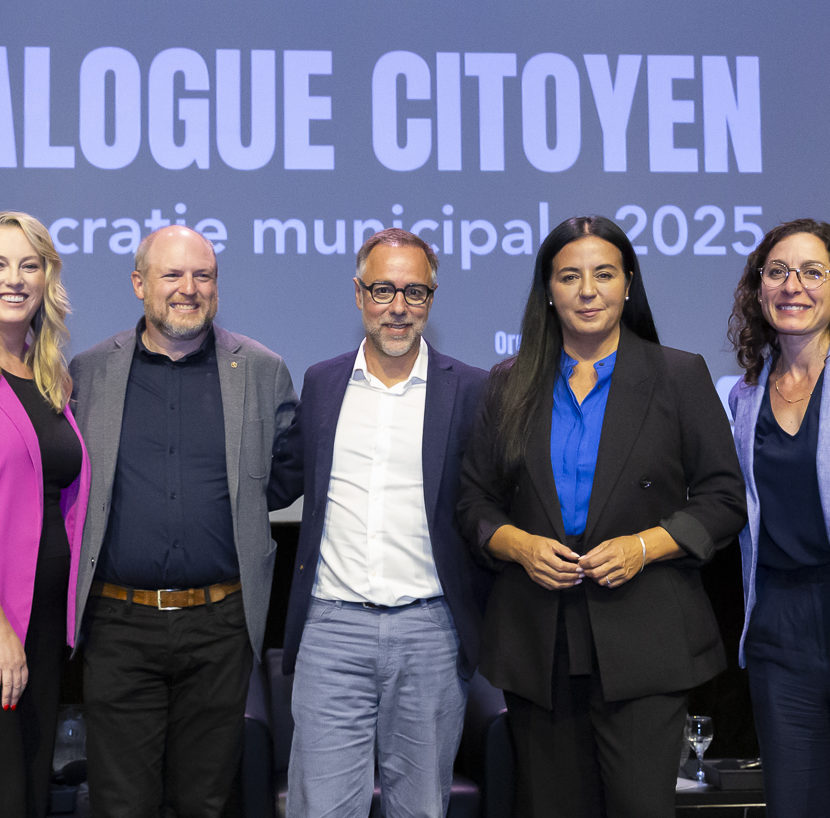
With just a few weeks to go before the 2025 municipal elections, Transition en Commun and the Institut du Nouveau Monde (INM) organized a major public forum on the future of municipal democracy in Montreal. Bringing together the leading mayoral candidates, the event addressed key issues such as citizen participation, democratic inclusion, and the challenges posed by political polarization, thereby helping to place the quality of Montreal’s democracy at the heart of the electoral debate.
In partnership with Transition en Commun, the Rosemont–La Petite-Patrie borough has launched its advisory committee on citizen participation to strengthen citizen engagement and incorporate best practices in local democracy. This innovative initiative reflects the borough’s commitment to making citizen participation a key driver of its decision-making and to advancing the socio-ecological transition by drawing on collective intelligence.